
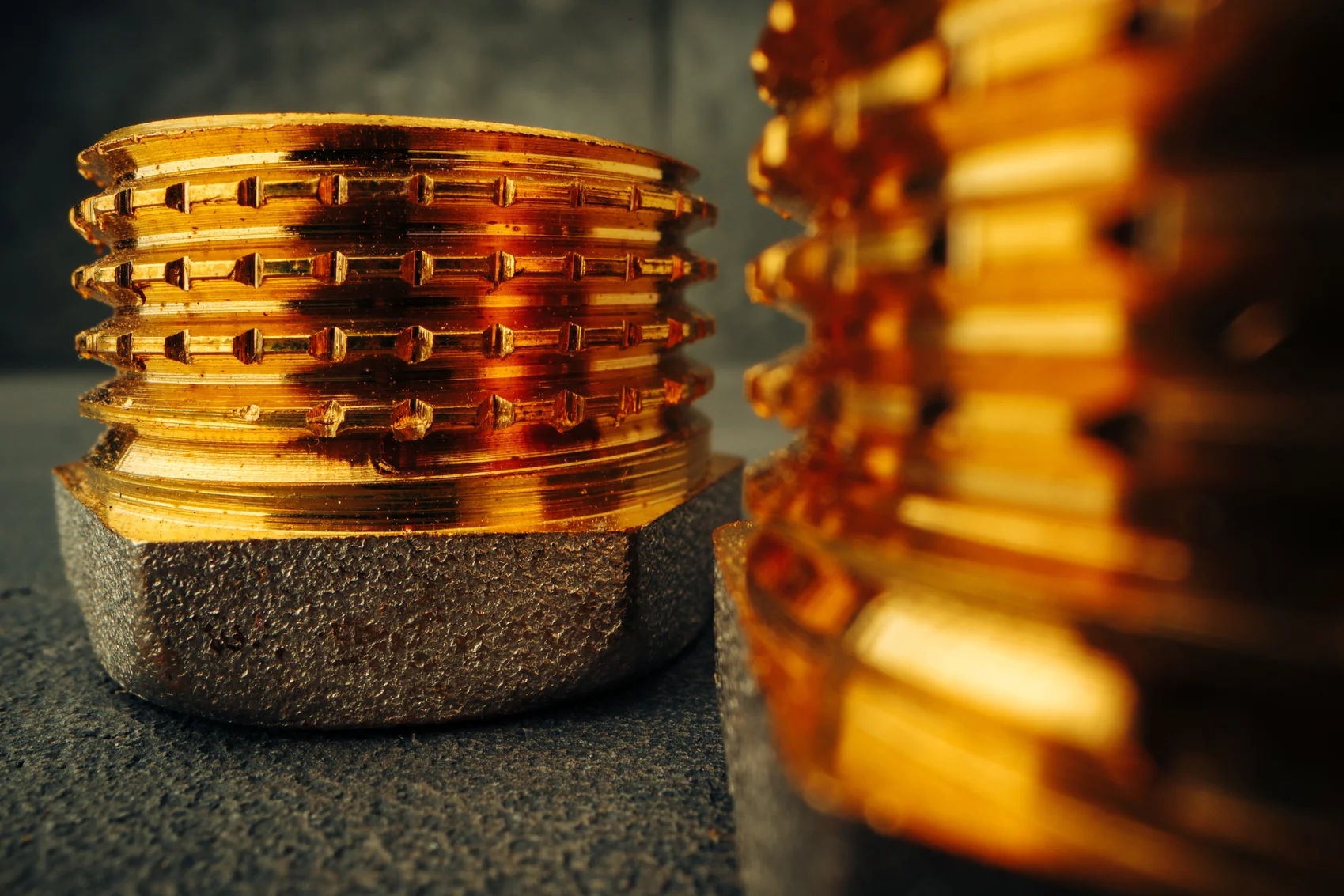
Someone sets a fitting on our counter and calls it metric. It’s a fair call, since “metric” is a general term, and the fitting often turns out to be British. That mix-up sits at the center of metric vs SAE hydraulic fittings. Metric SAE, and British threads can look nearly identical on the bench and behave very differently under pressure.
The same metric vs SAE split shows up in bolts and sockets. On a hydraulic fitting, a mismatch strips threads or sends fluid across the shop floor. On a crane, downtime can start at $10,000 an hour. H.O.W. Rubber stocks a majority of thread families, and we can tell them apart in minutes. This guide covers the pairs that confuse people most at our counter.
What Separates Metric From SAE Hydraulic Fittings
Metric fittings are measured in millimeters. SAE fittings, often called standard, are measured in inches. In metric vs SAE, thread pitch separates the two: the distance between threads in millimeters on a metric fitting, and threads per inch on an SAE fitting.
Size and pitch both have to match, and so does the fitting style, whether that’s a cone or a straight thread. Miss any one and a fitting may thread in without ever sealing.
Roughly half of what customers ask for is metric or DIN.
Metric Thread Pitch Chart, Compared with SAE and British
| Thread Family | Measured In | Pitch Means | Examples From Our Counter |
|---|---|---|---|
| Metric | Millimeters | Distance between threads, in mm | DIN, M27x1.5 |
| SAE (standard) | Inches | Threads per inch | JIC, O-ring boss (ORB) |
| British (BSP) | Inches | Threads per inch | BSPP (½”-14) |
| Pipe thread | Inches | Threads per inch | NPT (national pipe thread) |
When “Metric” Turns Out to Be British
“Metric” works as a general term, so British threads often get called metric. A British thread, like a ½”-14 BSPP, has 14 threads per inch and is measured in inches. It won’t mate with a millimeter-pitch metric thread, even when the two look close.
Force the wrong one on and the threads strip, or the joint sprays fluid. Checking the pitch before you buy avoids both.
The Lookalike That Leaks: Pipe Thread vs. O-Ring Boss
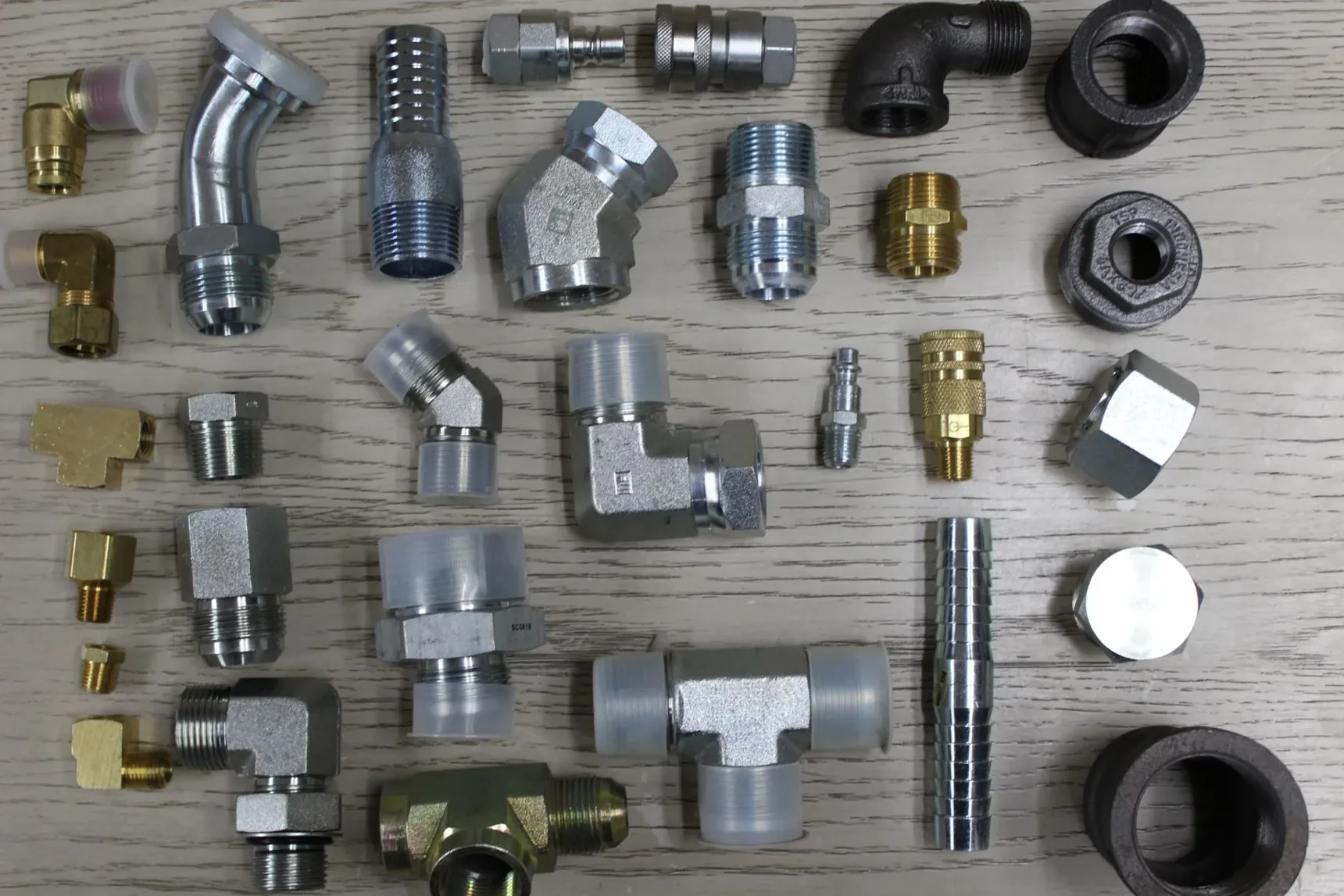
NPT, or national pipe thread, and O-ring boss (ORB) fool more buyers than any other pair we see. A pipe thread fitting will screw into an O-ring boss port, but it won’t seal correctly. A half-inch pipe thread can seal at first, then start weeping and eventually leak.
One skid steer quick connect shows how it plays out. Someone threaded a pipe thread fitting into an O-ring boss port, and it held for about a week. Then the machine’s vibration caused a leak.
The Metric Thread That Fools Experienced Hands
M27x2 looks like an O-ring boss, and it doesn’t seal like one. A regular metric M27x1.5 exists too, which makes the pair hard to tell apart. Even at our counter, it takes a minute to pin down. M27x2 has also started showing up on truck ABS units.
How We Identify an Unknown Thread
We sort metric vs SAE hydraulic fittings with a thread identification kit. It confirms the pitch, in threads per inch or threads per millimeter, and shows whether we’re looking at a cone or a straight thread. With the part on the counter, identification takes less than five minutes.
Thread names are easy to mix up. Many describe a hose with a fitting on it and ask whether we carry it. We ask them to bring it in, and they generally bring the hose or the fitting itself so we can duplicate it.
You can check a thread yourself with a micrometer on the outside of the thread and a thread pitch gauge, which we sell in standard and metric. Without a kit, it’s hard to be certain. Bring the part and we’ll confirm it.
Now and then we see a manufacturer-only part we can’t stock, and we send the customer back to the manufacturer. That’s rare. Most of the time, we can fix the problem.
Why Customers Switch From DIN to JIC
The other end of a DIN fitting carries a metric thread. To move a customer off DIN, we change the hose end to a JIC conversion fitting. Most of the time we don’t push customers to convert, and if they’d rather stay on DIN, that’s fine. It comes down to preference.
Customers working far from a supplier often want JIC, because JIC is easier to find. They can pick up a replacement at a local parts store, though they’ll pay about three times what we charge.
DIN Hydraulic Fittings: Why the Seal Matters
DIN hydraulic fittings follow the German metric standard, and our metric crimp-on fittings are made in Germany. H.O.W. has stocked metric fittings since we opened in 1991.
In our experience, a DIN fitting connected to a DIN fitting is a “forever fitting,” as long as it’s tightened properly. Overtighten it and the threads stretch, which makes it hard to take apart, like a jar lid you can’t open. A DIN fitting connected to a universal metric fitting will thread together, but it isn’t the proper seat. Treat that pairing as a temporary fix. It can work for a while, but it won’t last, and we don’t recommend it.
If your equipment runs DIN, we stock DIN light and heavy compression fittings to match. See our hydraulic hose fittings and adapters.
Quick Answers on Metric vs SAE Hydraulic Fittings
What is the difference between metric and SAE hydraulic fittings?
Metric fittings are measured in millimeters, and pitch is the distance between threads. SAE fittings are measured in inches, and pitch is the number of threads per inch.
How do I tell a metric fitting from a British one?
Check the pitch. Metric is measured in millimeters. British, like a ½”-14 BSPP, is measured in inches, at 14 threads per inch. A thread identification kit settles it in minutes.
Will a pipe thread fitting seal in an O-ring boss port?
It will thread in, but it won’t seal correctly. It may hold briefly, then start to weep and leak, especially on a machine that vibrates.
What does a thread pitch gauge do?
A thread pitch gauge measures the pitch of a thread, in threads per inch or threads per millimeter. We sell gauges in standard and metric.
More questions about hydraulic hose repair? See our FAQ.
Bring Us the Part
Not sure where your fitting lands in the metric vs SAE divide? Bring in the hose or fitting, and we’ll identify it. We’ll find the right match for metric and British threads. If it’s a manufacturer-only part, we’ll say so and point you to the manufacturer.
Call (405) 236-1222 or stop by 2640 SW 15th Street, Oklahoma City. We’re open 8 AM to 5 PM, Monday through Friday.